Selected work

Publications

Peer-reviewed research, ordered by year.

  1. 2026

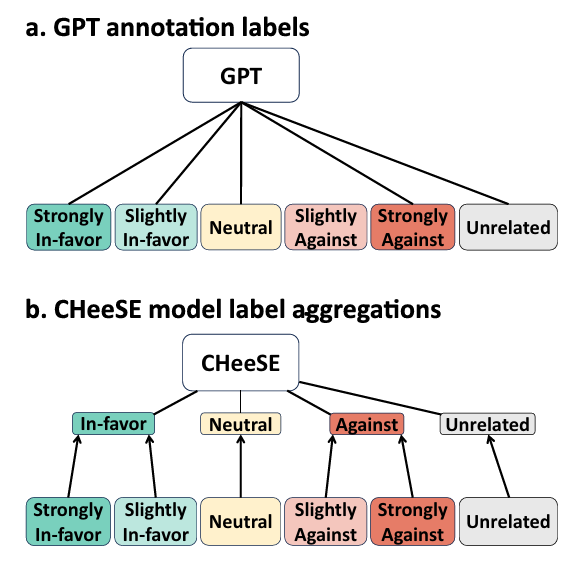
    Diagram showing the GPT annotation labels and their aggregation

    Frontiers in Political Science · Volume 8

    GPT outperforms BERT and LIWC for stance and anger detection in German news articles and user comments

    Mayrhofer L, Foramitti M, Fassnacht S, Köhler JK, Todorova B, Lamm C, Martins M

    View paper
    Read abstract

    We live in an era of abundant qualitative language data that allows insights into societal trends and public attitudes, such as social media posts and news articles. Natural language processing (NLP) has become essential for analyzing this data, with recent advances in Large Language Models (LLMs) driving rapid progress. These models show strong potential for psychological research, though their validity in detecting attitudes varies across domains. This study evaluates GPT-3.5 and GPT-4 Turbo for identifying stances and expressions of anger in texts about climate activism, comparing them with traditional methods. The dataset included news articles and user comments from eight German outlets. A subset of 320 articles and 330 comments was manually annotated by three human raters for (1) stance toward Fridays for Future and (2) anger expression. GPT models outperformed BERT (Bidirectional Encoder Representations from Transformers) in stance detection and LIWC (Linguistic Inquiry and Word Count) in anger detection. Moreover, GPT achieved higher agreement with the human majority vote than individual raters agreed with each other. GPT-4 Turbo performed slightly better than GPT-3.5, though differences were minor and domain-specific. Overall, GPT models proved reliable and efficient for annotating nuanced German texts where conventional NLP tools often struggle.
  2. 2026

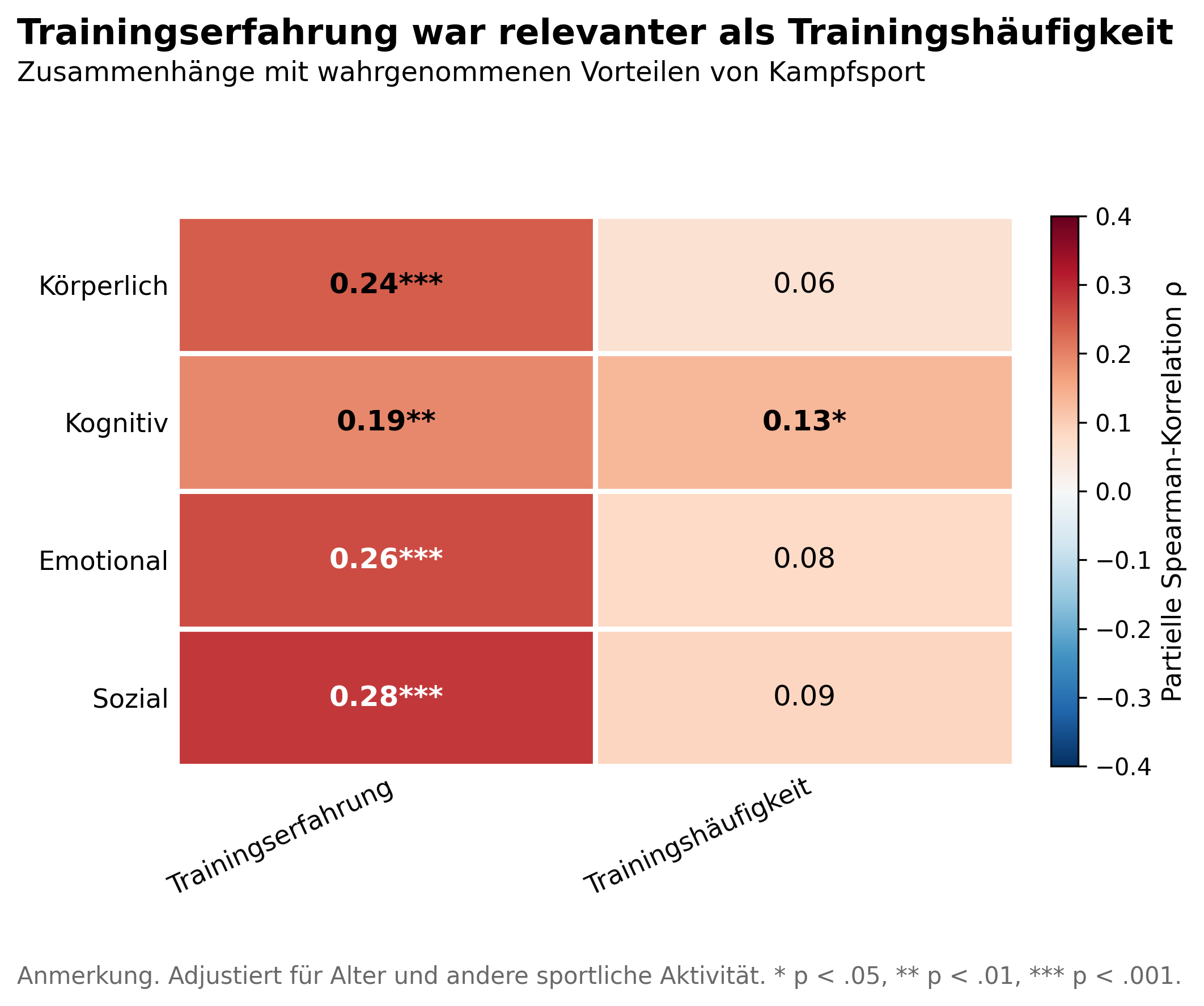
    Heatmap of correlations between martial arts training and perceived benefits

    Frontiers in Psychology

    Perceived health benefits of martial arts and combat sports

    Zormann E, Foramitti M, Nater UM

    View paper
    Read abstract

    While there are many anecdotal claims and a growing body of literature on the health benefits of martial arts (MA) and combat sports (CS), research on their perception by practitioners is scarce. This cross-sectional study (N = 268) explored the associations between self-rated health and perceived health benefits of MA/CS, by utilizing a MA/CS specific questionnaire as well as widely used measures for mental and physical health. Additionally, the association of training age (in years) and training frequency (per month) with perceived health benefits was examined. The results of the hierarchical multiple linear regression analyses indicated that training frequency was not associated with perceived health benefits, whereas training age showed a small association. Interestingly, in an explorative step, current self-rated health was associated with additional variance in the perceived health benefits. Small to medium associations were found between mental and physical health. It is concluded that health benefits are reported by MA/CS practitioners regardless of training age or frequency, and may therefore be relevant to a larger population. Nevertheless, future studies are needed to further explore these relationships using a longitudinal approach.

  3. 2026

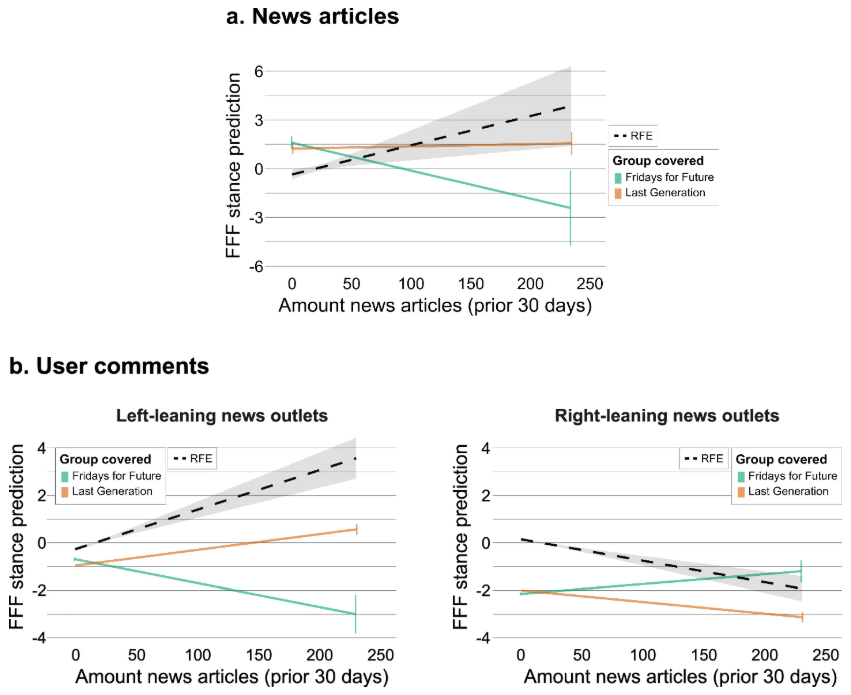
    Graphs of news and user-comment stances toward climate activist groups

    npj Climate Action

    Radical climate protests shaped portrayals of moderate activists and reader attitudes in German news media

    Mayrhofer L, Foramitti M, Fassnacht S, Koehler JK, Todorova B, Lamm C, Martins M

    View paper
    Read abstract

    Radical climate protests have been theorized to shape perceptions of moderate climate groups, a dynamic known as the radical flank effect (RFE). We examine this phenomenon through a longitudinal analysis of German media discourse on climate protests. Using validated large language model prompts, we annotated stances and anger in 2376 news articles and 225,121 user comments covering the moderate activist group Fridays for Future (FFF) and the more radical Last Generation (LG). Short-term increases in LG protest coverage were associated with increased support for FFF in news articles and left-leaning outlets' user comments, but with decreased support in right-leaning comments. However, these patterns were not observed over longer time periods. Although anger expressed in the general coverage of climate protests impacted subsequent support for FFF, this effect was not specific to coverage of radical protests. These findings highlight the temporally bounded and ideologically contingent nature of RFEs in media discourse.

  4. 2025

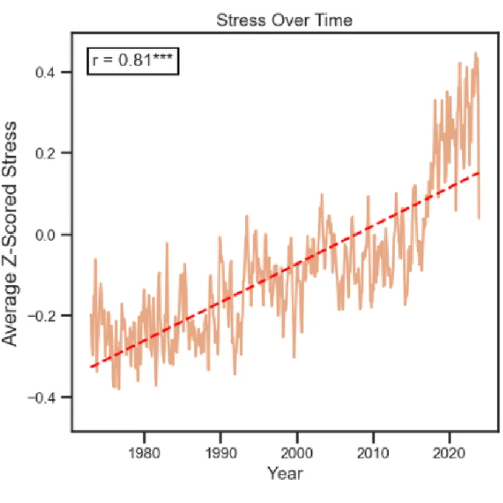
    Line graph showing stress-related language increasing over time

    Scientific Reports

    Rising Stress, Negativity, and Simplicity in US Billboard Top 100 Song Lyrics (1973–2023) are Disrupted by Societal Crises

    Foramitti M, Nater U, Lamm C, Martins M

    View paper
    Read abstract

    This study examines diachronic trends in stress-related language, sentiment, and lyrical complexity in popular music's lyrics from 1973 to 2023, exploring how major societal shocks influenced people's music preferences and offering insights into collective mood management through music. Over 20,000 lyrics of songs in the US Top 100 charts during this period were analyzed using Natural Language Processing techniques, with stress-related language assessed using a dictionary-based approach (LIWC), sentiment estimated via a rule-based sentiment analysis tool (VADER), and complexity via the LZ77 compression algorithm. Our analysis reveals a significant increase in stress-related language, alongside declines in positive sentiment and lyrical complexity over five decades. Surprisingly, societal shocks like COVID-19 coincided with attenuations rather than amplifications of these trends, indicating a preference for emotion-incongruent music, which may serve as a form of emotion regulation, such as escapism. When controlling for long-term trends, we found no significant relationship between income growth and stress or sentiment in lyrics. In contrast, periods of high-stress language corresponded with increased lyrical complexity. These results support the notion that music plays a dual role in collective mood management, functioning as mood management and regulation, depending on the context and intensity of societal emotions.

  5. 2024

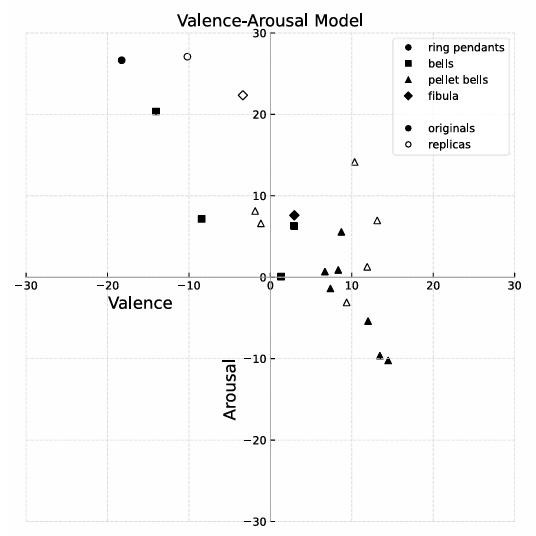
    Valence-arousal plot for original and replica archaeological sound objects

    Journal of Music Archaeology · Volume 2

    How do we perceive the sounds of both original and replica archaeological metal sound objects? An interdisciplinary study of systematic musicology, music psychology, and music archaeology

    Muehlhans J, Foramitti M, Pomberger BM

    View paper
    Read abstract

    The history of metal idiophones dates back as far as metalworking itself. These sound objects served various purposes, such as attracting attention, displaying social status, and practical use in signalling. While once integral to everyday life, these sound objects are now rarely seen outside of museums or medieval markets. In the project "Metallic Idiophones from 800 BC - 800 CE", original and replicated metal idiophones from Central Europe were examined for their acoustic properties. Within the group of examined objects, variations in construction, shape, and alloys based on era and region can be seen. In this study, a selection of 21 original and replicated idiophones that cover most of the variations are examined for the subjective perception of their sounds. Participants in the online listening experiment (n = 102, mean age = 35.6) rated sounds on pleasantness, brightness, sharpness, complexity, activation, and valence. Personality traits, musicality, preferences for sound jewellery, and beliefs in object properties were also assessed. While 75% showed low preference for sound jewellery, some associated it with high social status or metaphysical abilities. Belief in these abilities correlated with openness and preference. No age or gender effects were observed in sound ratings. Overall, sound level negatively correlated with pleasantness and positively with sharpness, activation, and valence. Sounds with higher tone-noise-ratio were perceived as brighter and sharper. Bell sounds were rated brighter, sharper, and higher in valence/activation than chimes, but lower in pleasantness. Though not directly applicable to the past, the study revealed effects related to human hearing rather than socio-cultural significance. Loud, bright, and sharp sounds were rated unpleasant, suggesting a shift from jewellery to signalling use.